Natural Dye Workshop
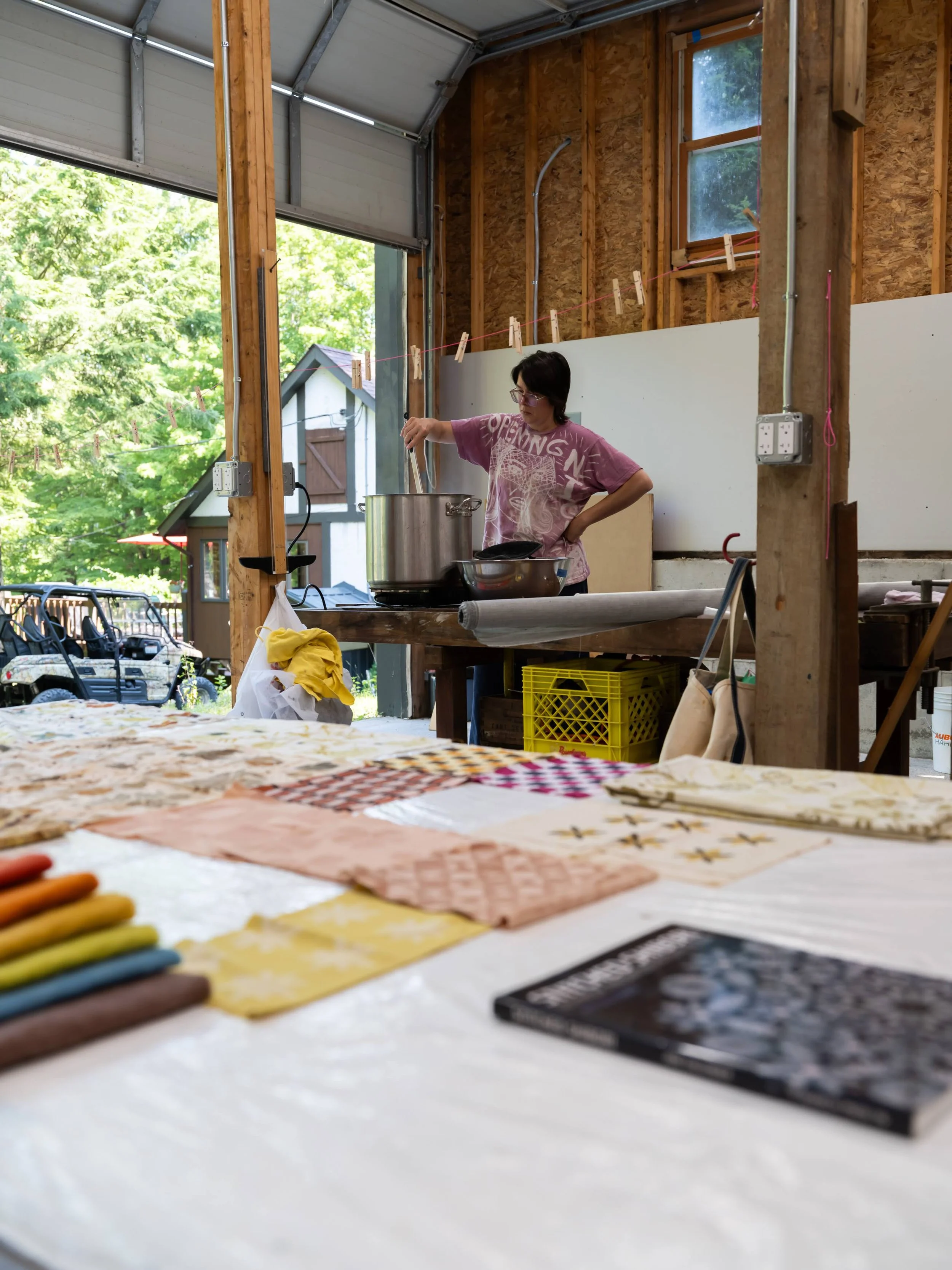
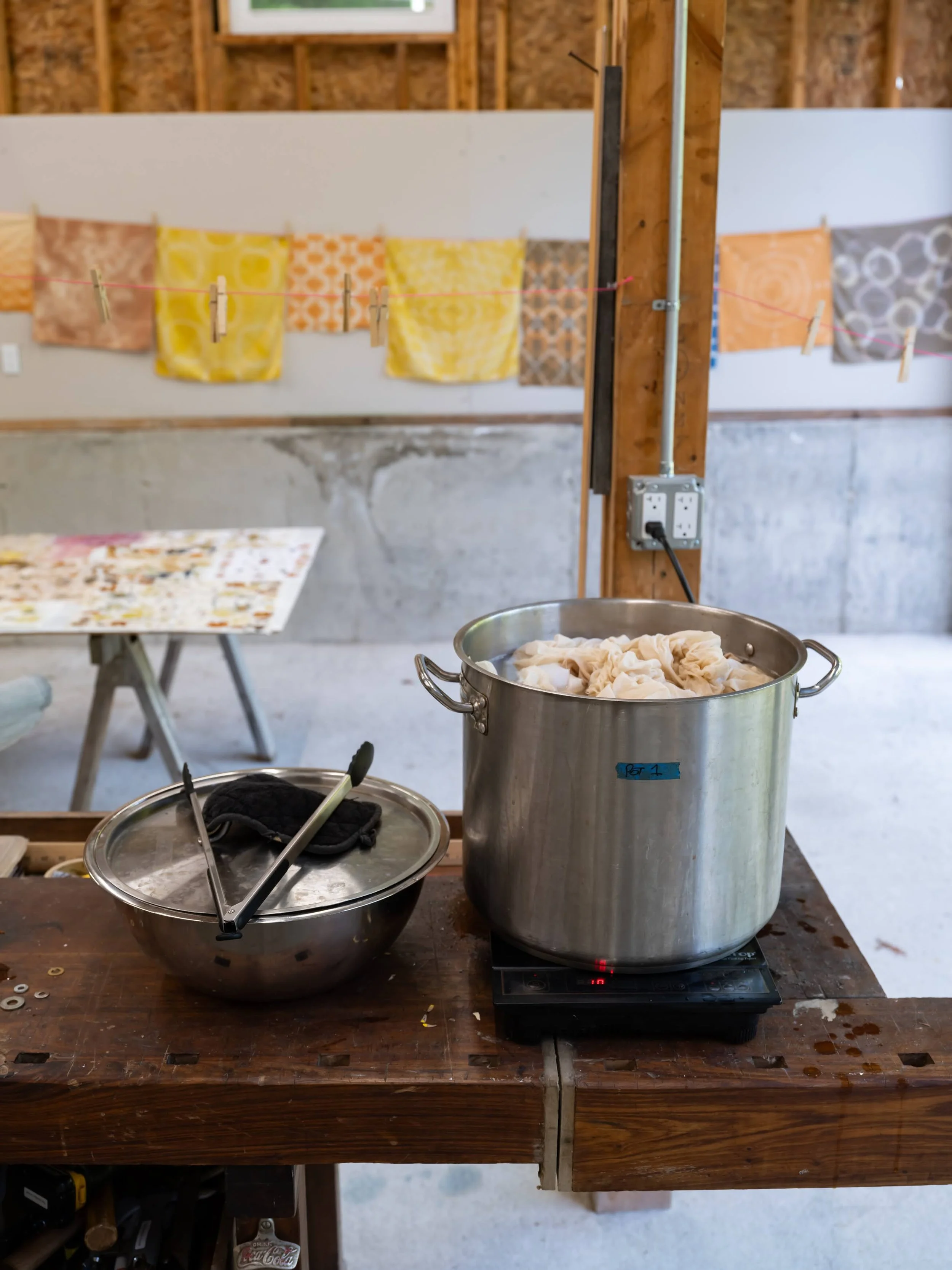
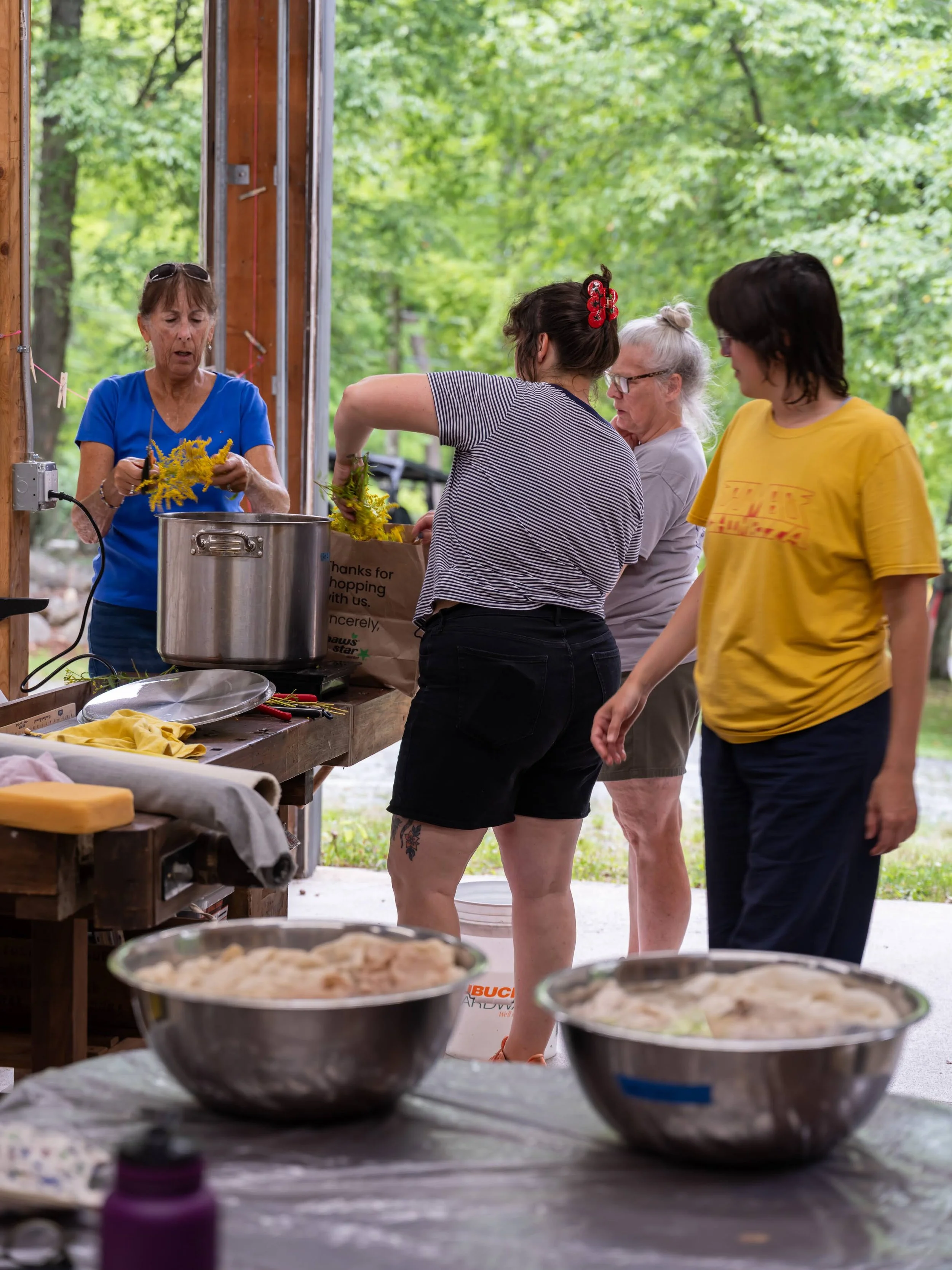
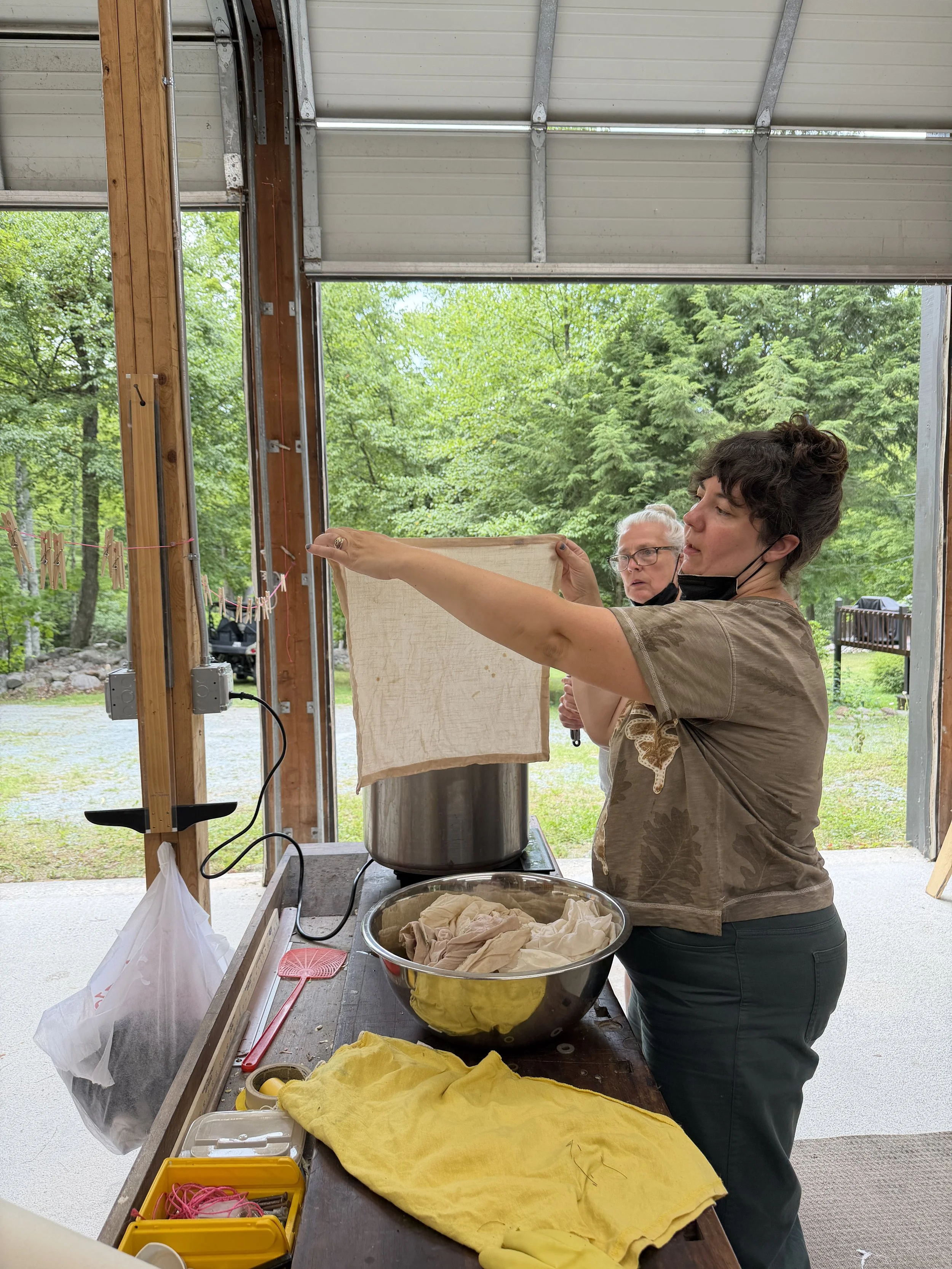
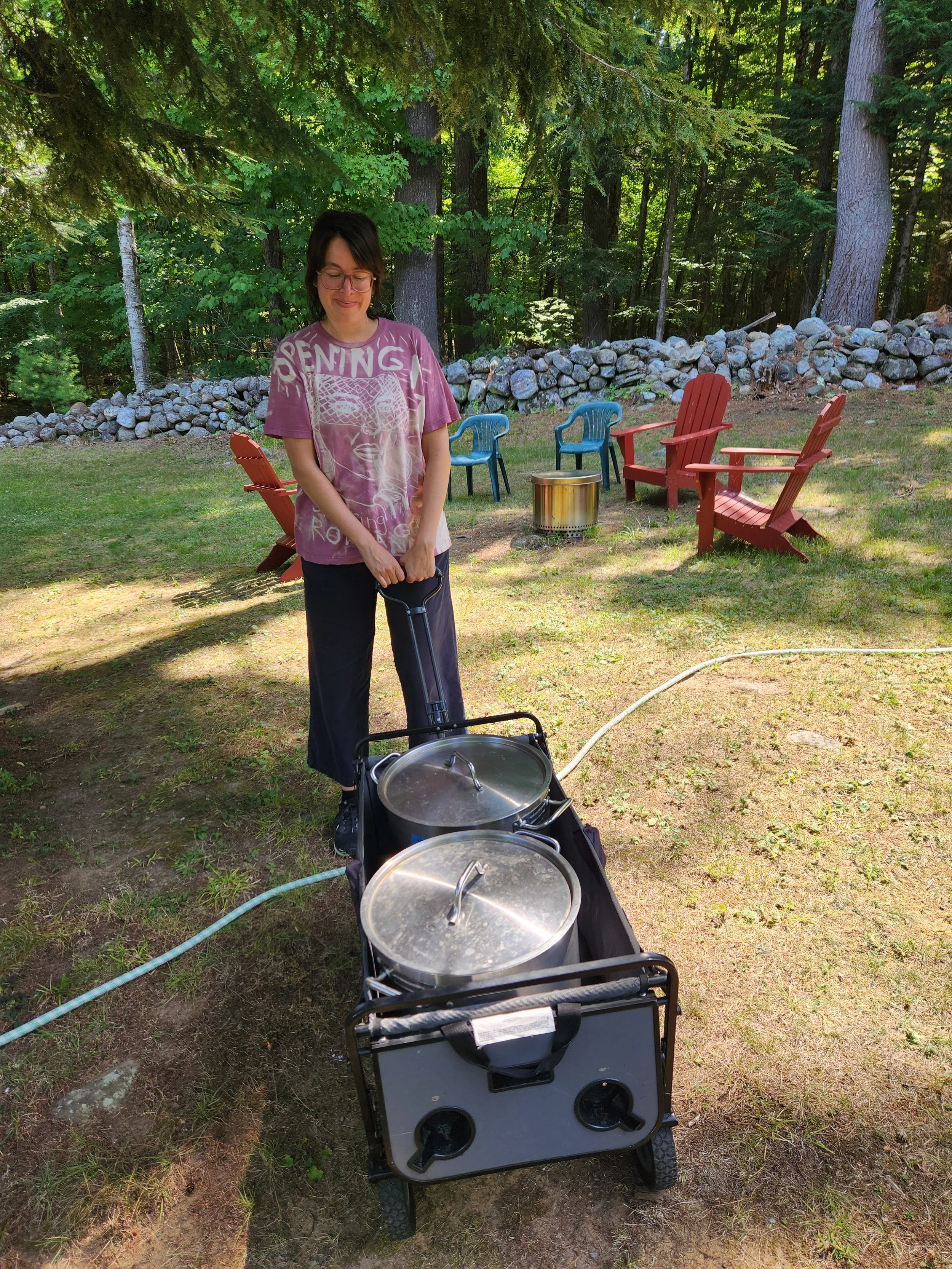
Goldey Projects hosted a Natural Dyes workshop with Laura Hricko. We learned so much about the intricate process and preparation involved in creating natural dyes. I am so grateful to have worked with such a talented instructor who so generously shared her wealth of knowledge with us.
Laura Hricko is a textile artist, educator, and lifelong Philadelphian. Her practice spans multiple fiber art techniques, including quilting, mending, embroidery, and textile surface design. She is guided by a deep curiosity about the historical and social significance of both materials and the processes used to transform them, and strives to be a steward of traditional textile practices.
In recent years, Laura has immersed herself in natural dyeing, using these ancient craft techniques to coax color from homegrown flowers, foraged plants, and food-waste materials. Through this work, her perspective on consumerism and production has shifted, influencing her artmaking, teaching practice, and her daily life. She aims to creatively reuse materials that are secondhand, gifted, inherited, or otherwise readily available, extending the life of what she already has, and highlighting the beauty and usefulness in what already exists.
As a teaching-artist, Laura creates hands-on natural dye experiences that invite students to reconsider their relationship with textiles, the natural world, and consumption, while discovering the art that can be created in collaboration with nature.
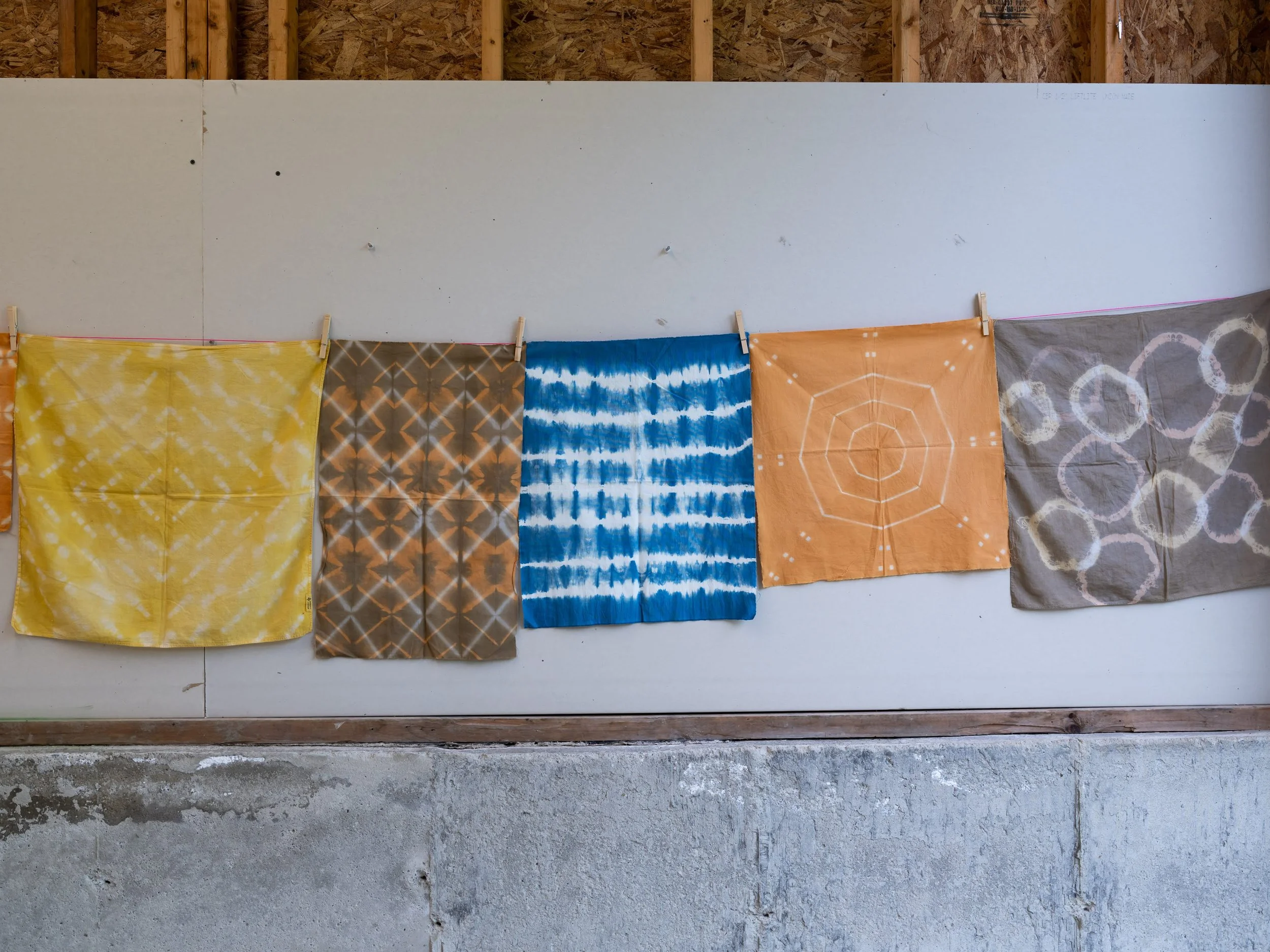
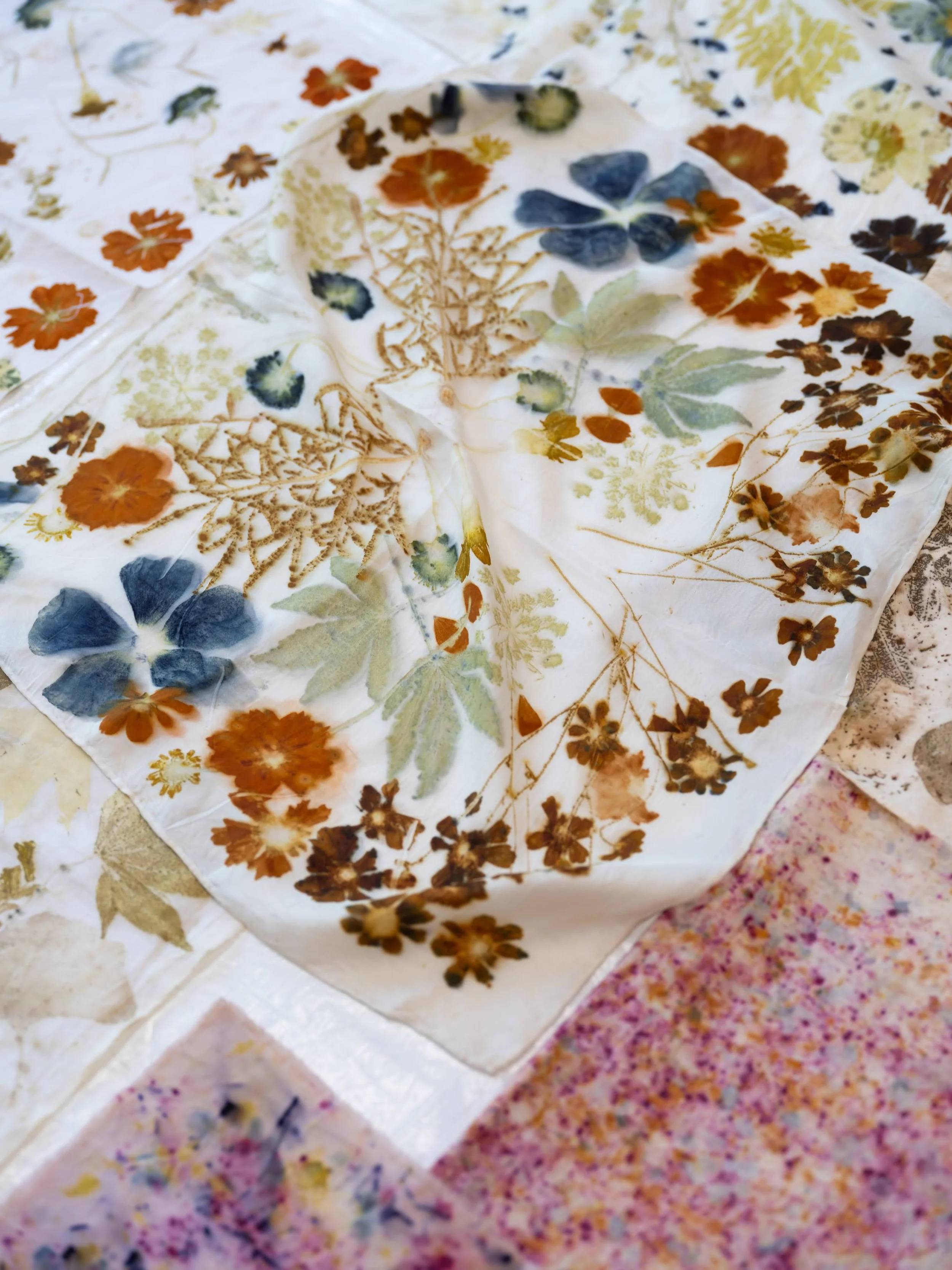
Examples of Laura Hricko’s work
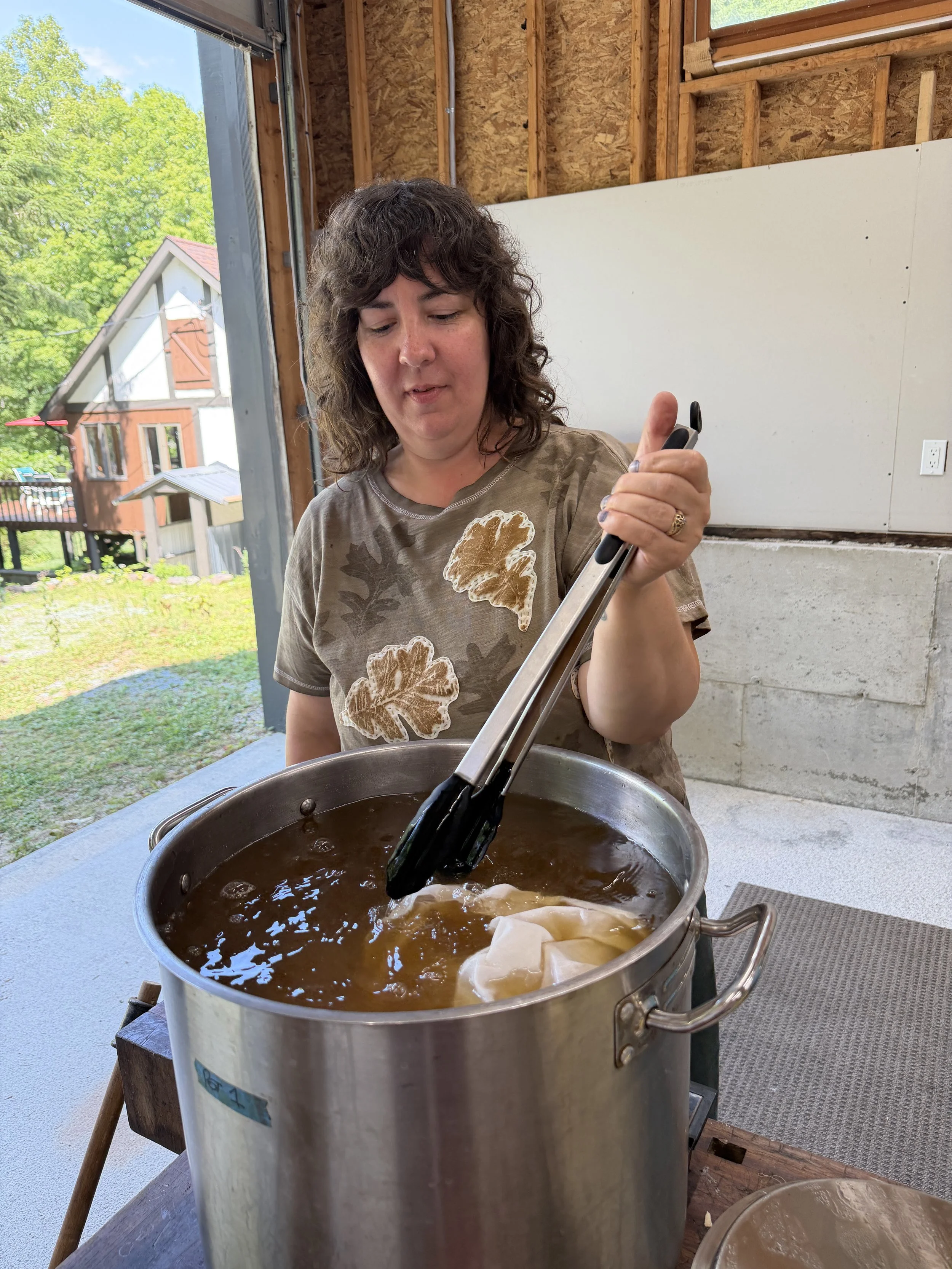
We spent the first day of the Natural Dye Workshop preparing our fabric and garments for dyeing. First, we scoured our fabrics, then treated them in a mordant bath. A mordant is a metallic salt used to fix natural dyes to fibers and is essential for the colorfastness of mordant dyes. This entire process took a full day to complete from start to finish, which truly demands a deep respect for the craft and a high level of care for the fabric. The exhausted mordant bath was given to acid-loving plants in the garden—rhododendrons in particular love acid.
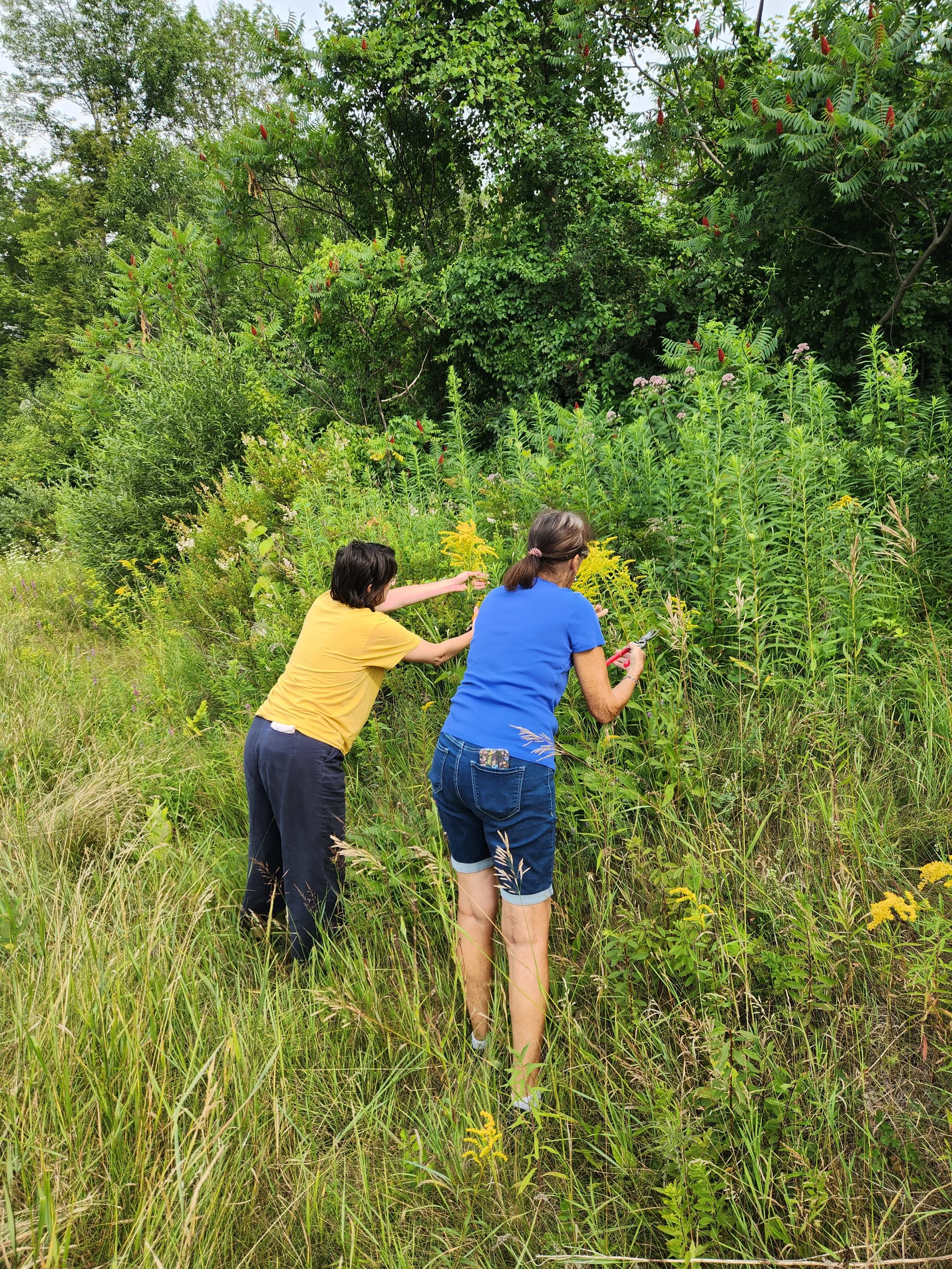
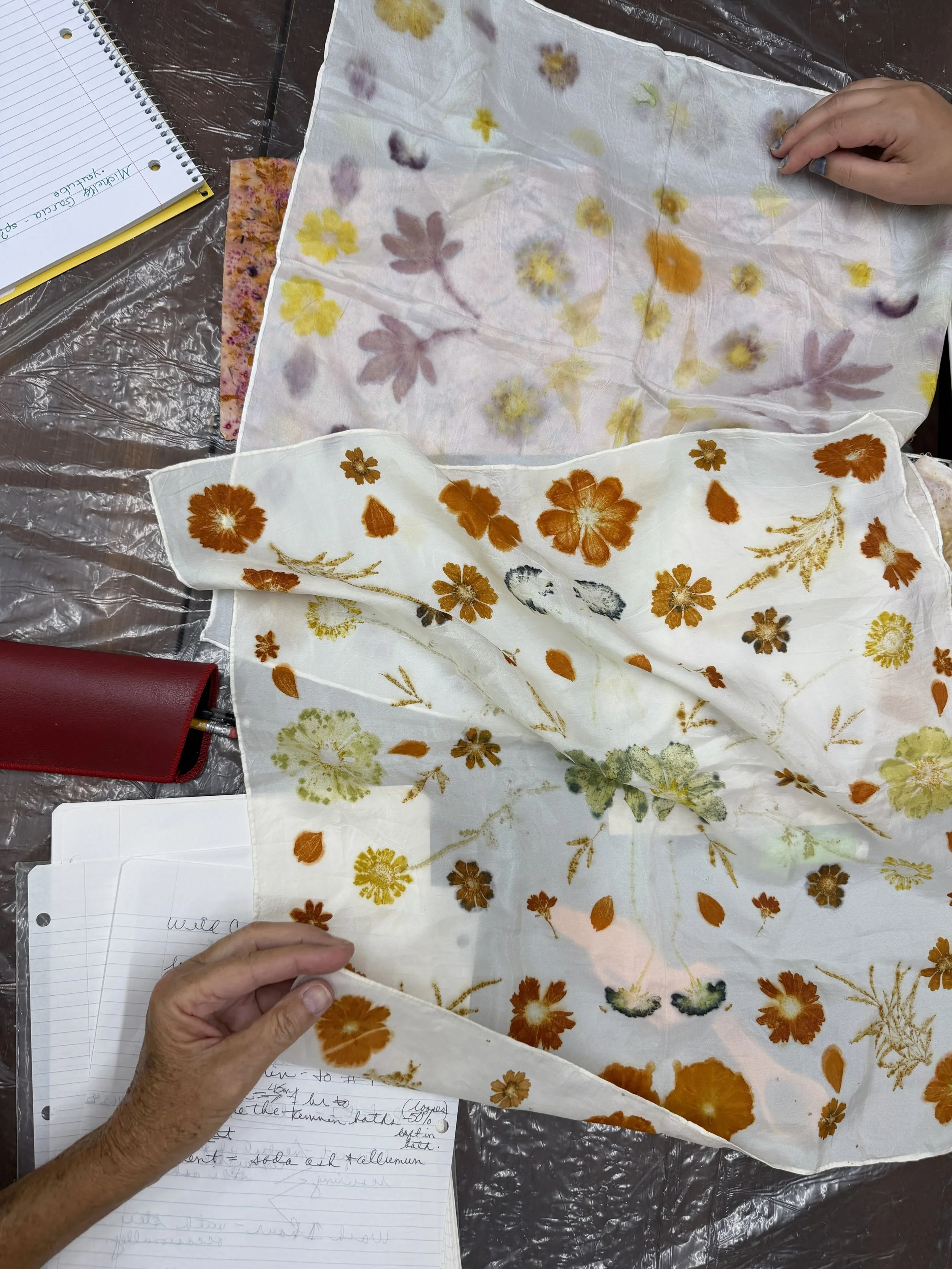
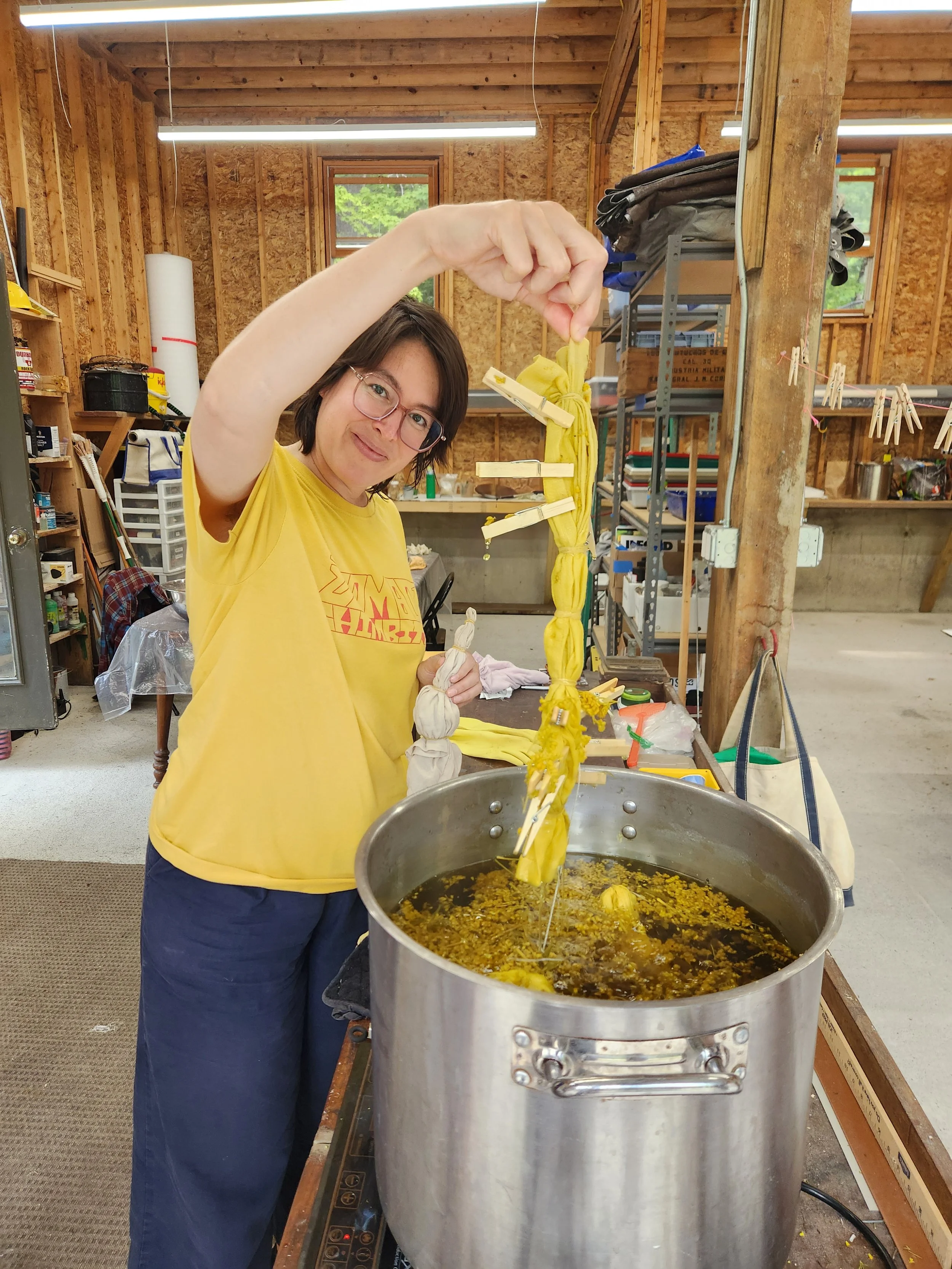
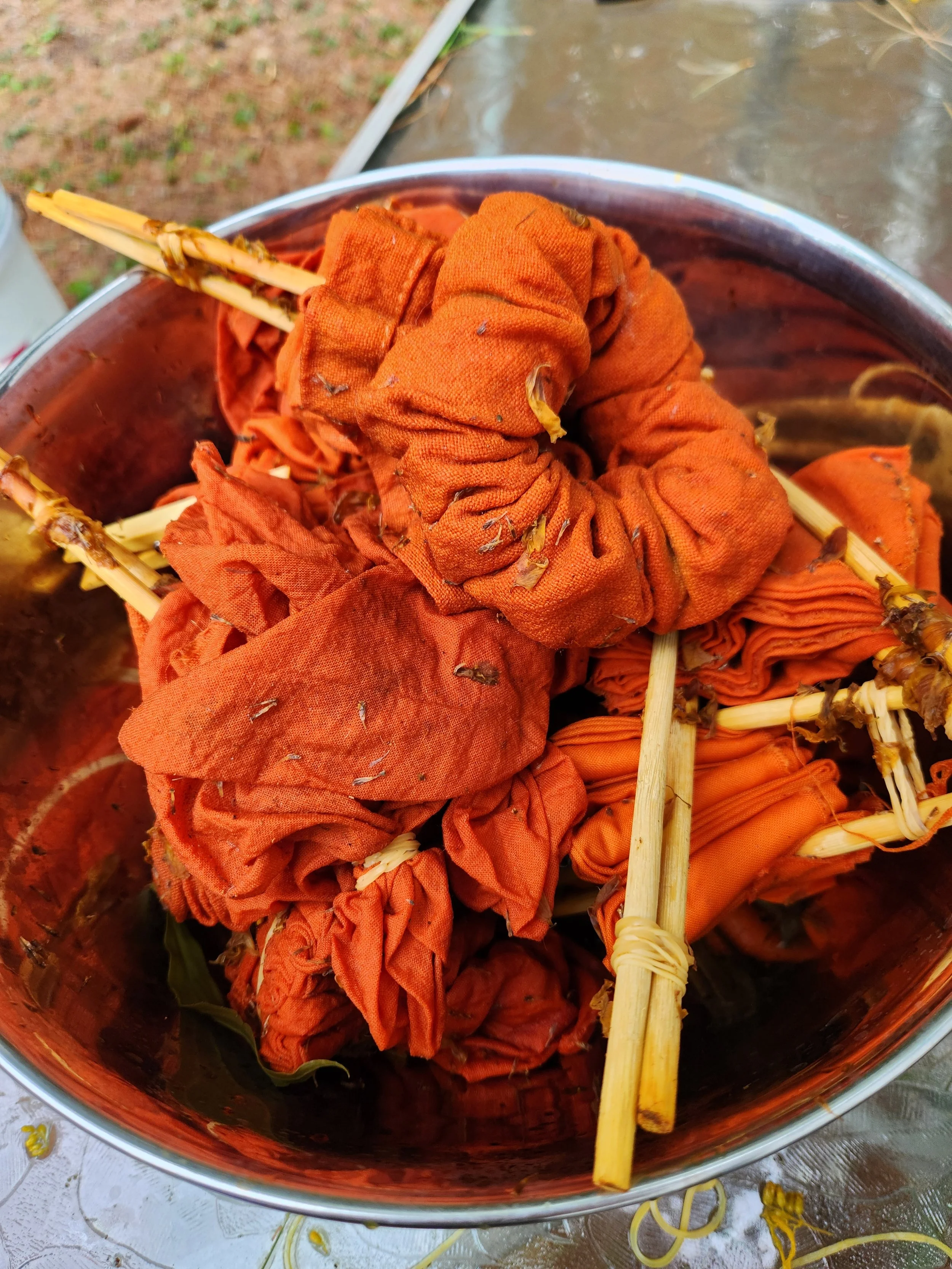
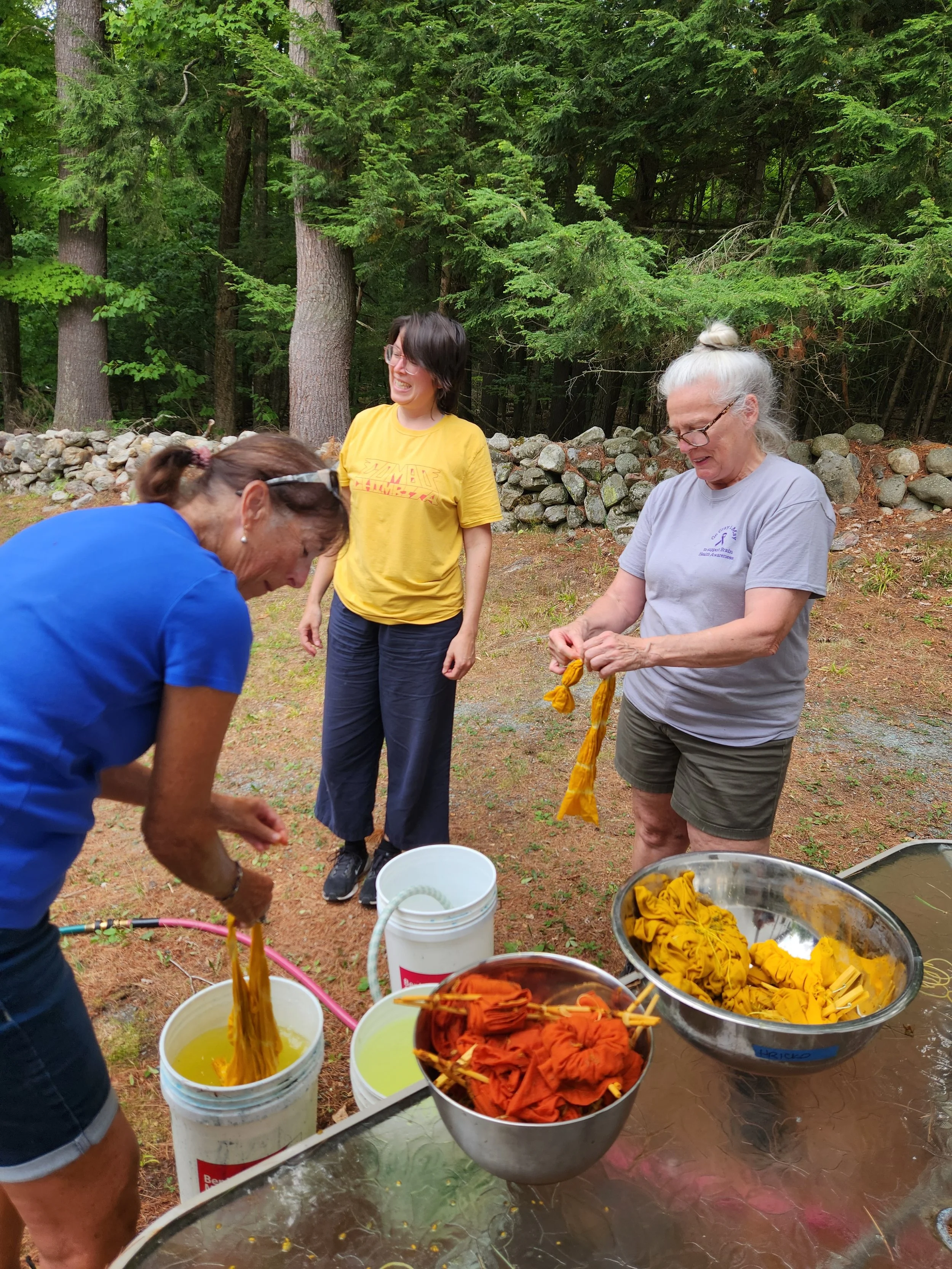
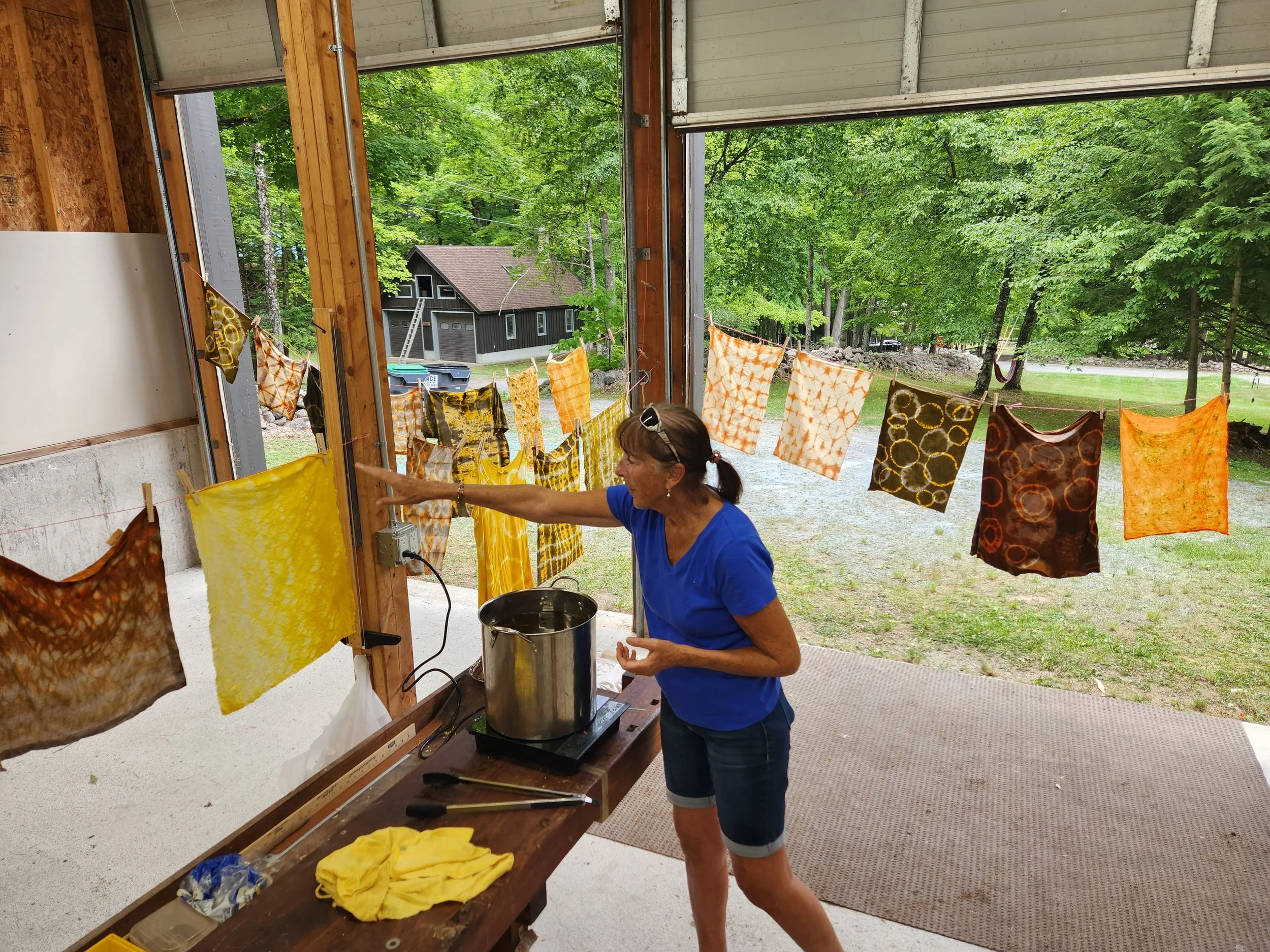
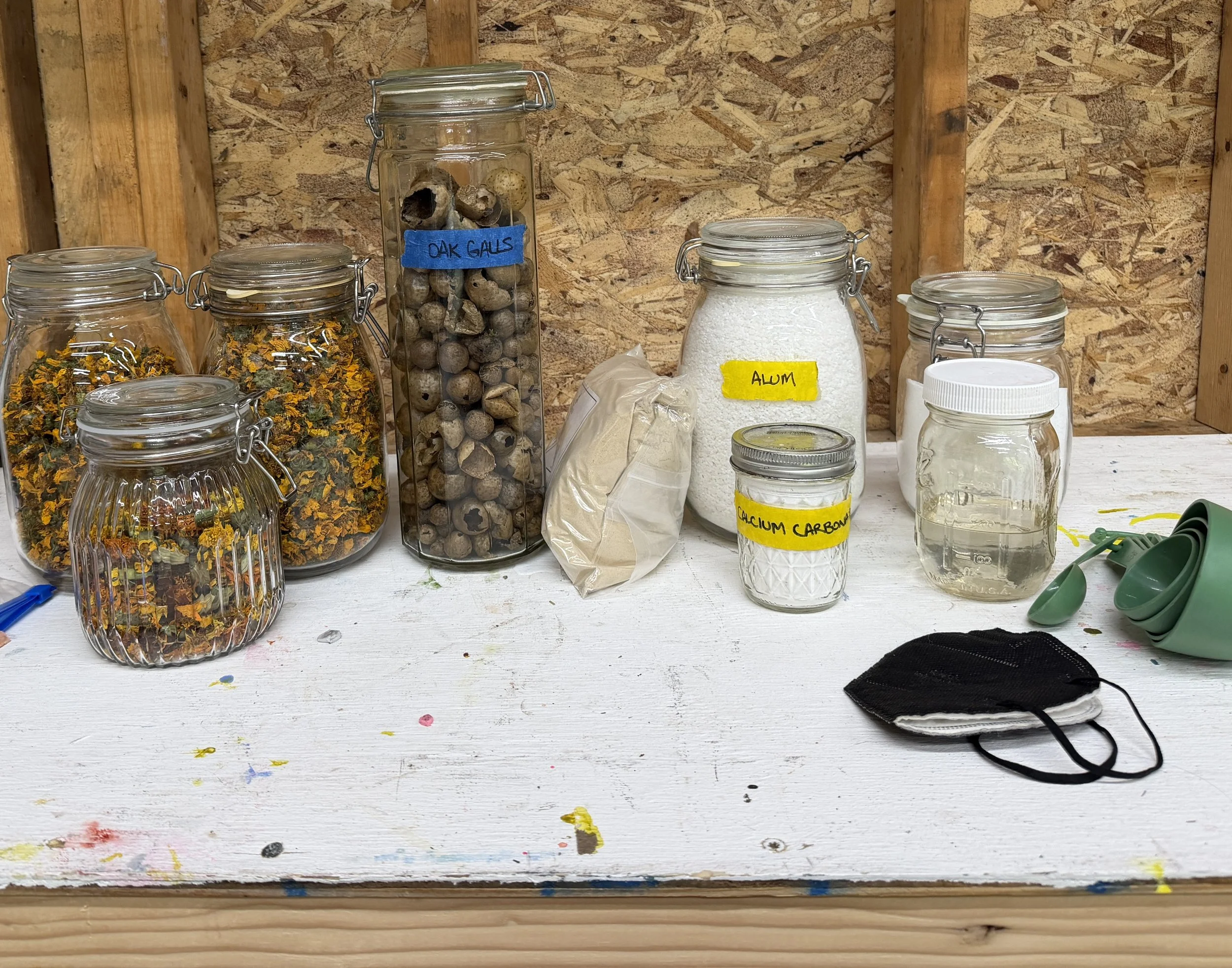
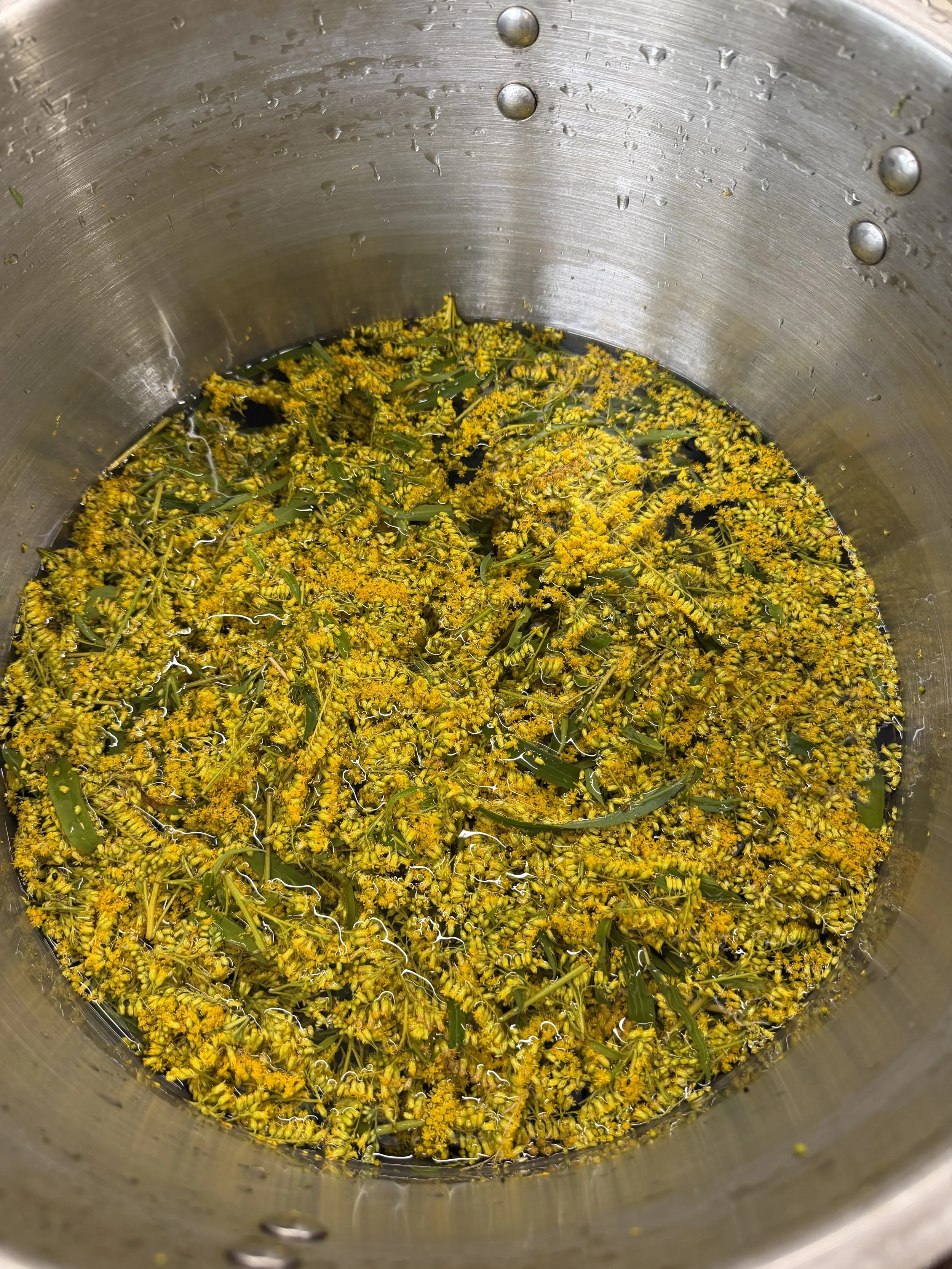
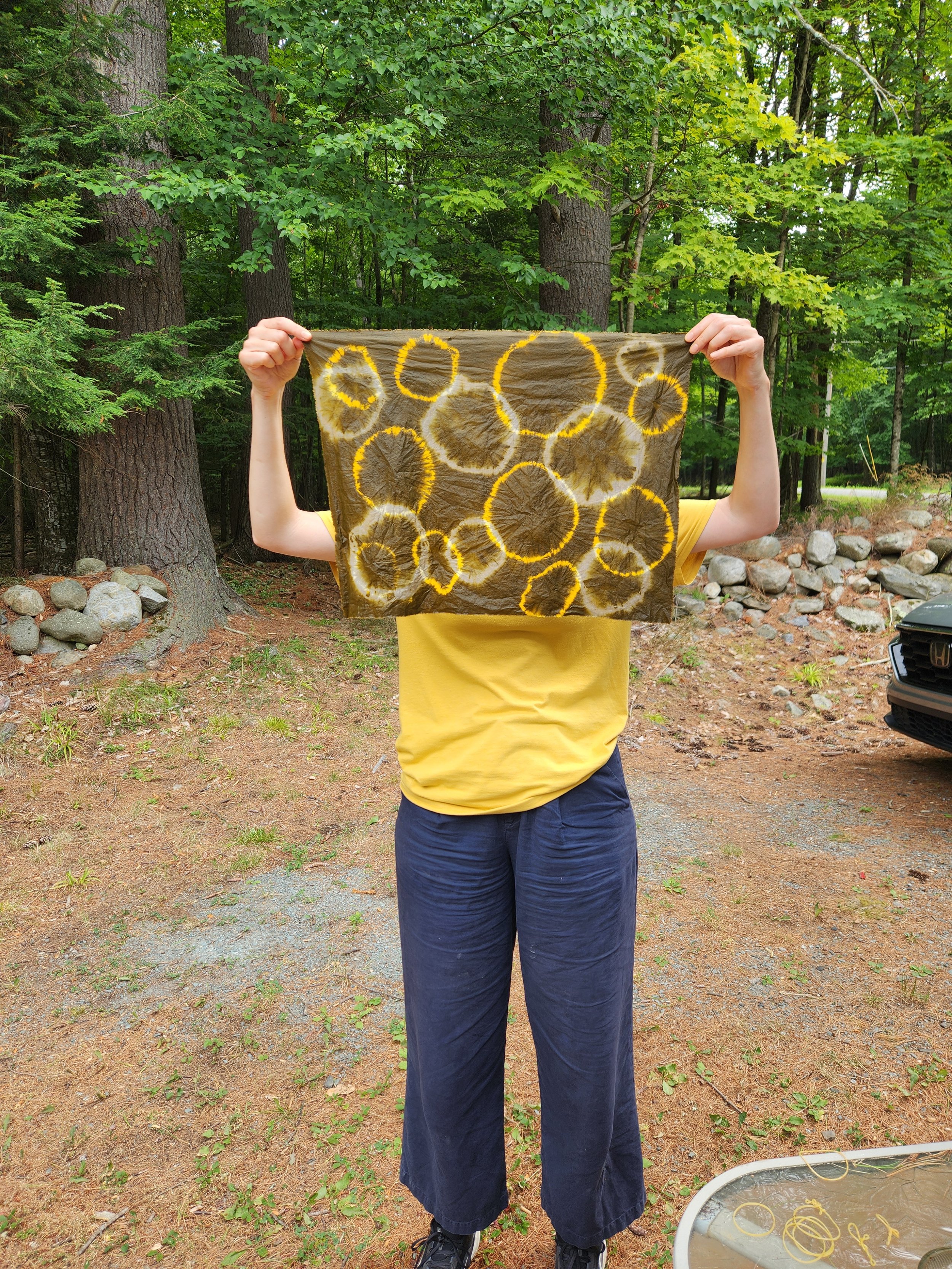
On day two we prepared two dye baths: one with dried coreopsis from Laura's garden, and the other with freshly picked goldenrod. In the morning, we harvested the goldenrod, which came early this year, from around a pond down the street. I will never forget the aroma from the goldenrod as the dye pot got hot—it had such earthy, lemony notes. Both natural dyes were so vibrant, resulting in saturated yellows and oranges. We then modified the dyes using iron, which resulted in dark, saturated greens and browns.
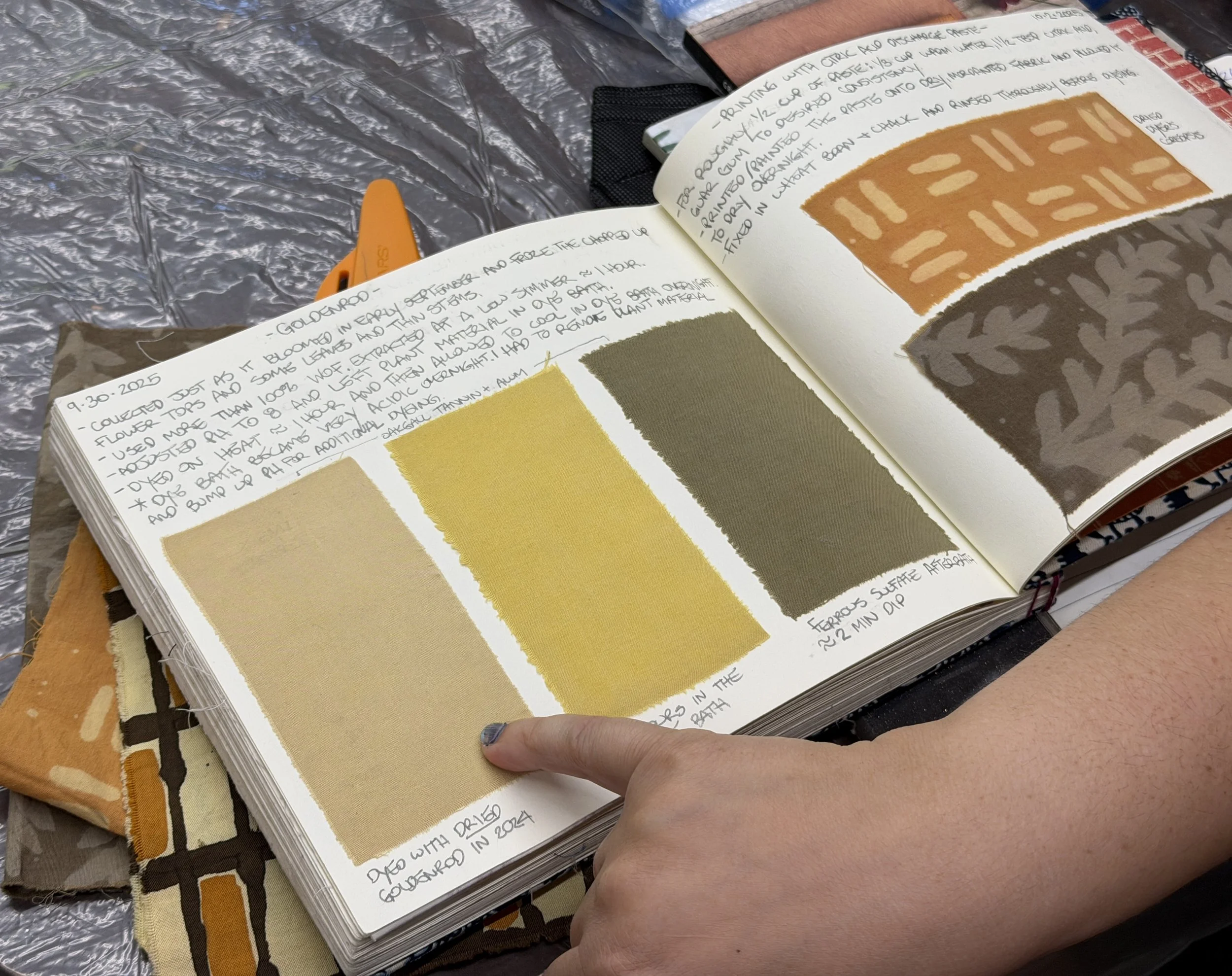
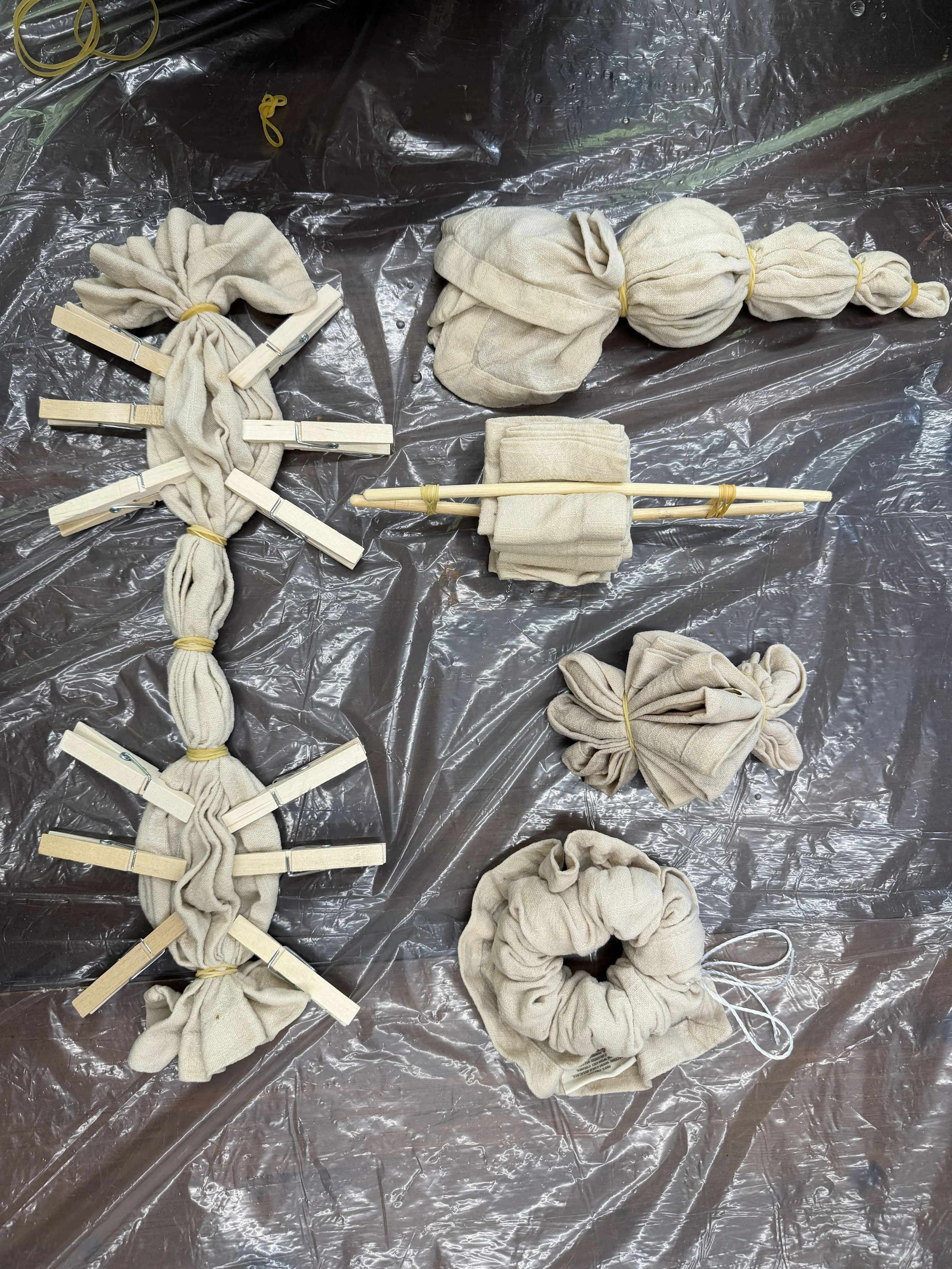
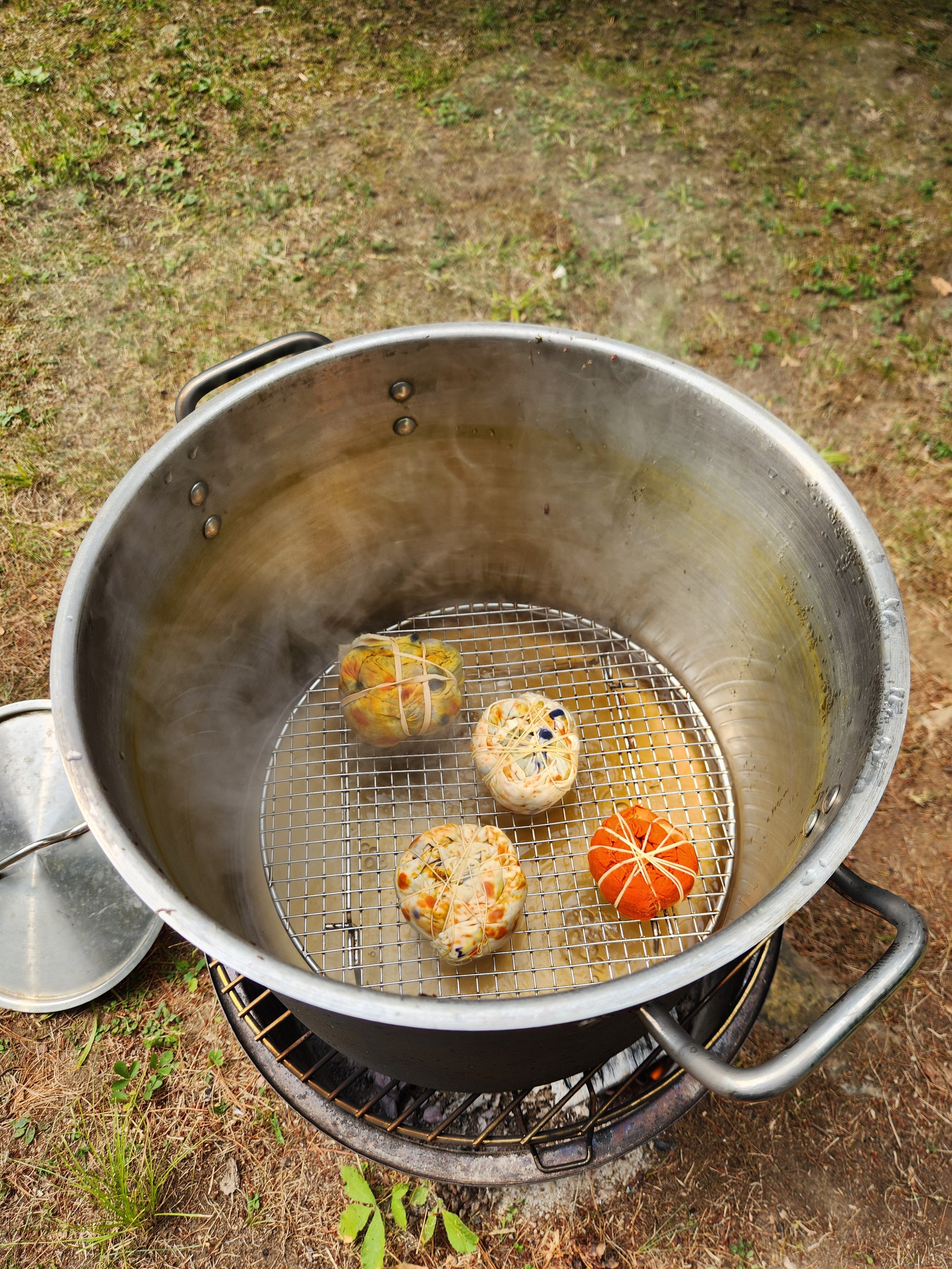
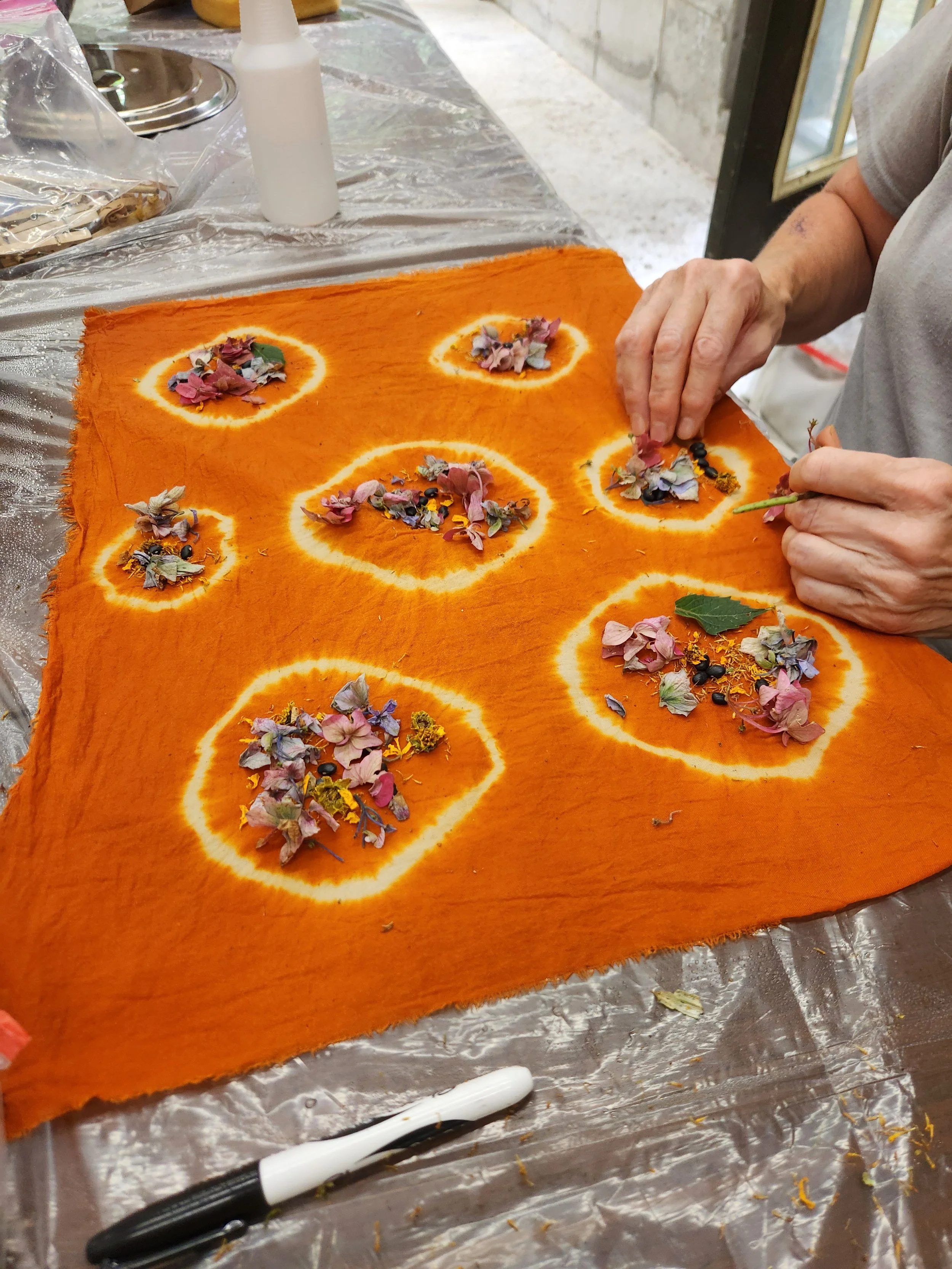
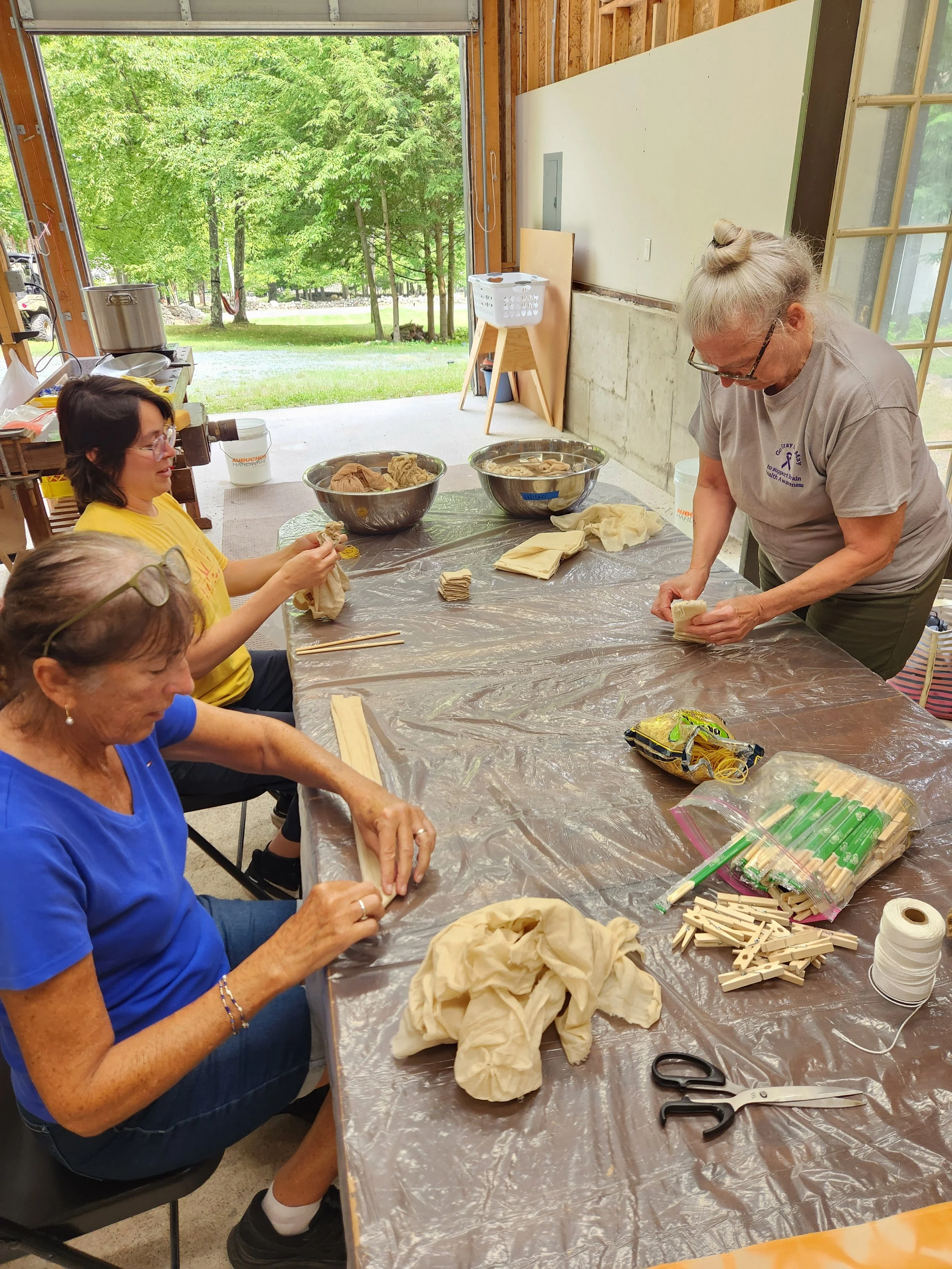
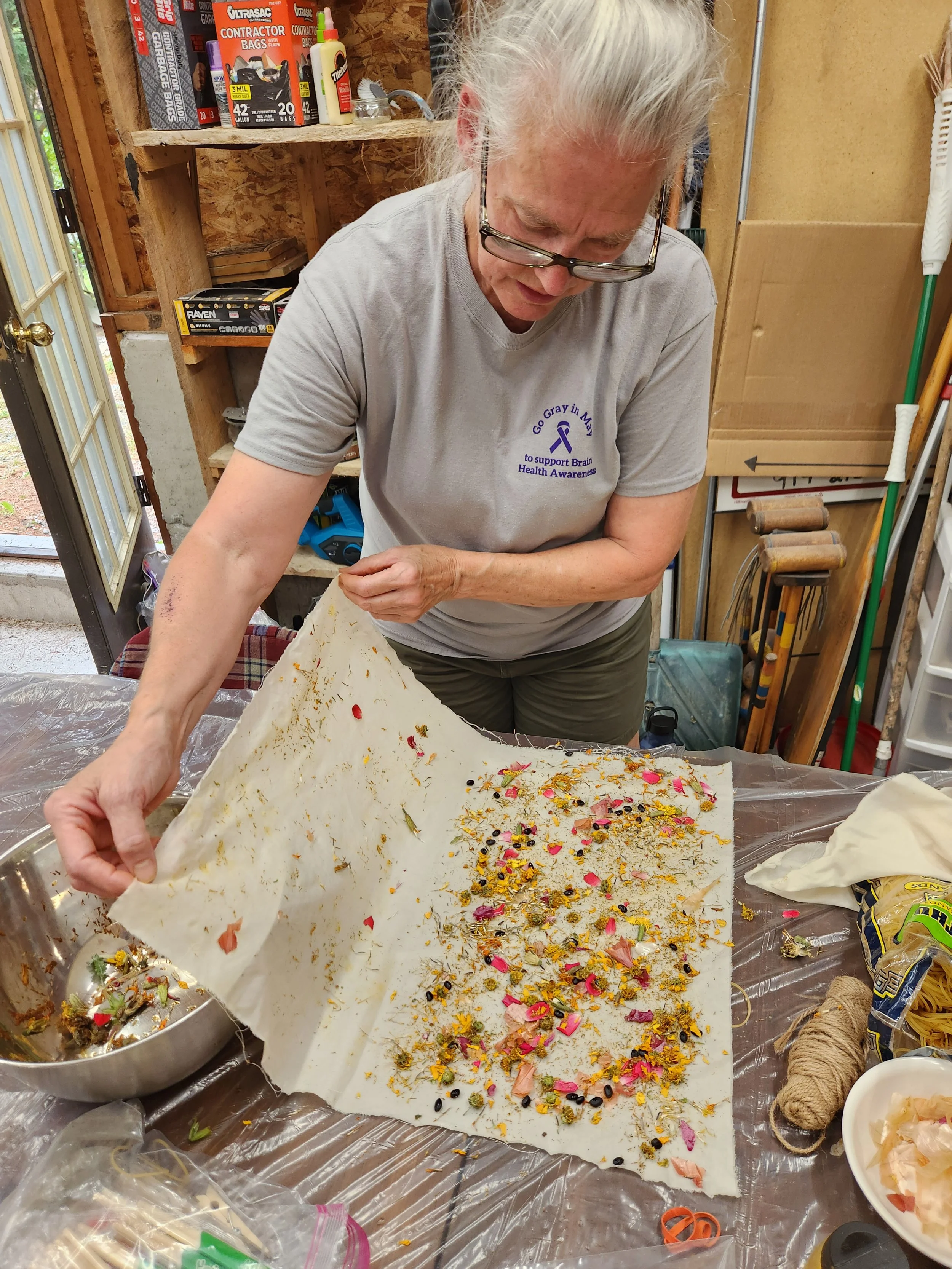
Laura taught us about various shibori techniques, including folding and scrunching using rubber bands, chopsticks, and clothespins. It was incredibly satisfying to unfold the bundles and reveal the unique patterns created by the different binding methods. We also modified some of the dyes using iron, which resulted in dark, saturated greens and browns. The final process was experimenting with bundle dyeing, where both fresh and dried materials are scattered onto fabric before being wrapped tightly into compact bundles. We tapped into our ancestors and set up a pot over a fire to steam the bundles. For the bundles, we used a beautiful mix of black beans, onion skins, Queen Anne's lace, and bits of dried coreopsis and marigold.